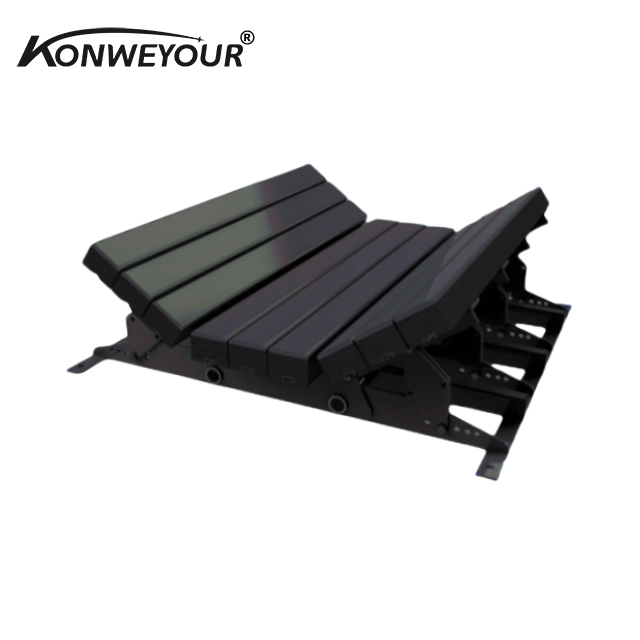
An impact bed is a critical component in conveyor systems, designed to protect conveyor belts from damage caused by heavy or falling materials at loading points. By absorbing shock and reducing stress on the belt, impact beds extend belt life, improve efficiency, and prevent costly downtime in industries such as mining, quarrying, cement, and bulk material handling.
Impact beds are suitable for a wide range of conveyor belt types. Rubber conveyor belts are widely used for transporting bulk materials such as coal, gravel, sand, and ores. These belts benefit from impact beds as the device absorbs heavy load impacts, preventing belt tears, premature wear, and misalignment. PVC and PU conveyor belts, commonly used in food processing, packaging, and light material handling, are also protected by impact beds. The cushioning effect prevents belt deformation, protects the belt surface, and maintains smooth operation.
Heavy-duty fabric-reinforced belts and steel cord belts, used in long-distance or high-capacity conveyors, are particularly vulnerable at loading zones where bulk materials drop from height. Installing impact beds ensures that the belt carcass and cover are not damaged, maintaining consistent belt tension and reducing maintenance needs.
Impact beds also provide protection for specialty belts, including chevron belts, modular belts, and flat belts in industrial applications. By absorbing shock, the impact bed prevents misalignment, edge damage, and spillage, ensuring operational safety and reliability.
Overall, impact beds are versatile devices capable of protecting almost all types of conveyor belts used in heavy-duty, medium-duty, and light-duty applications. Proper selection of impact bed material, length, and design ensures maximum protection, improved belt longevity, and uninterrupted material flow. Industries can achieve higher efficiency, reduced maintenance costs, and safer operations by integrating impact beds into their conveyor systems.