
HighEfficiency conveyor transfer systems for Japan’s Industrial Sector

  • Home
  • Global Service
  • HighEfficiency conveyor transfer systems for Japan’s Industrial Sector

High-Efficiency conveyor transfer systems for Japan's Industrial Sector

Precision-engineered material handling solutions tailored for the rigorous standards of Japanese manufacturing and mining operations.

High-Efficiency conveyor transfer systems for Japan's Industrial Sector

Optimizing heavy-duty bulk material transport across Japan's specialized industrial landscapes with cutting-edge stability and energy efficiency.

The State of Material Handling in Japan

Analyzing the integration of high-precision conveyor technology in the Japanese market.

Japan's manufacturing sector is characterized by an obsession with "Kaizen" (continuous improvement), which directly influences the demand for a sophisticated conveyor system. Given the limited geographical space and high land costs in industrial hubs like Aichi and Osaka, companies prioritize vertical integration and space-saving designs.

In the resource extraction sector, the use of a mine conveyor must withstand Japan's unique seismic activity and high humidity. This requires materials that offer superior corrosion resistance and structural flexibility to prevent downtime during unexpected tectonic shifts.

Furthermore, the strict environmental regulations in Japan drive the demand for low-noise and dust-free coal mine conveyor setups. The shift toward carbon neutrality is forcing a transition from traditional mechanical drives to high-efficiency, smart-controlled propulsion systems.
Evolution of Continuous Conveying Technology

From mechanical simplicity to AI-driven intelligent logistics.

Market Development History

From the 1960s to the 1980s, the Japanese market relied on heavy-duty mechanical belts focused on raw capacity. During this era, the primary goal was rapid industrialization, where basic conveyor components were standardized for mass production.

Between 1990 and 2010, the focus shifted toward automation and precision. The introduction of PLC (Programmable Logic Controllers) allowed for synchronized movement, reducing material waste and increasing the safety of underground transport systems.

Since 2010, the industry has entered the era of "Smart Conveying," integrating IoT sensors and predictive maintenance to eliminate unplanned outages, specifically within high-stakes mineral processing plants.

Future Development Trends

Autonomous Monitoring Systems

Integration of AI cameras to detect belt misalignment or tear in real-time, reducing manual inspection frequency.

Energy-Regenerative Drives

Implementation of motors that capture energy during downhill transport, aligning with Japan's Green Growth Strategy.

Modular Component Architecture

A shift toward standardized, rapid-replacement conveyor components to minimize Mean Time To Repair (MTTR).

Industry Trends and Future Outlook

Strategic forecasting for the next 3-5 years in Japan's transport equipment sector.

IIoT Integration
Real-time data streaming from belt sensors to cloud platforms for predictive analytics.
Carbon-Neutral Materials
Development of biodegradable and recycled polymer belts to reduce industrial footprints.
Seismic-Resilient Design
Implementing flexible joint systems to maintain operation during geological instabilities.
Modular Scalability
Rapid deployment of interchangeable sections for agile facility reconfiguration.

Industry Outlook

Based on Google search trends for "Industrial Automation Japan," there is a significant spike in queries regarding "Smart Logistics" and "Autonomous Material Handling." This suggests that the next five years will see a move away from standalone belts toward integrated, self-optimizing networks.

The synergy between robotic arms and conveyor systems will become the standard, creating a seamless transition from extraction to processing without human intervention, specifically in the high-precision chemical and mineral sectors.

Localized Application Scenarios in Japan

Practical deployments of our conveying technology in Japanese industrial environments.

01. Hokkaido Coal Extraction Facilities

Deployment of a reinforced coal mine conveyor designed to operate in sub-zero temperatures, utilizing specialty rubber belts that prevent cracking in extreme cold.

02. Nagoya Automotive Assembly Lines

Installation of high-speed, precision conveyor transfer systems that synchronize with robotic welding cells for just-in-time (JIT) production.

03. Kyushu Semiconductor Material Handling

Clean-room compatible conveyor system setups featuring anti-static components to prevent particulate contamination in wafer transport.

04. Tohoku Mineral Processing Plants

Heavy-duty mine conveyor systems integrated with automated weighing and sorting scales for high-volume throughput.

05. Tokyo Urban Logistics Hubs

Compact, multi-tier conveying solutions using space-optimized conveyor components to maximize cubic volume in metropolitan warehouses.

Brand Story

Global Development Journey of Hebei Juntong Machinery Manufacturing Co., Ltd.

Foundational Excellence

Established with a mission to solve the core pain points of heavy-duty bulk transport, focusing on durability and load-bearing capacity.

Technological Breakthrough

Developed proprietary alloy treatments for conveyor rollers, significantly reducing friction and energy consumption.

Global Market Expansion

Successfully entered the Asian market, adapting engineering standards to meet the rigorous JIS (Japanese Industrial Standards).

Smart Integration Era

Launched the "Intelli-Move" series, merging mechanical hardware with IoT monitoring for zero-failure operations.

Future-Ready Logistics

Committed to sustainable manufacturing, aiming to provide the world's most energy-efficient conveyor solutions.

Complete Conveying Portfolio for Japan

Comprehensive hardware and system integration for every industrial need.

Common Questions for Japan Industrial Clients

Expert answers regarding technical specifications and regional compliance.

How do your conveyor systems meet Japanese seismic safety standards?

Our systems utilize flexible structural mounts and reinforced bracing designed to absorb shock and prevent structural collapse during seismic events common in Japan.

What is the expected lifespan of high-load mine conveyor belts in humid climates?

By using specialized moisture-resistant compounds and anti-corrosive conveyor components, our belts maintain optimal performance for 5-8 years depending on the material density.

Can your coal mine conveyor systems be integrated with existing PLC networks?

Yes, our control systems are designed for universal compatibility, supporting common industrial protocols like Modbus, Profibus, and EtherCAT.

Do you provide modular conveyor components for rapid onsite replacement?

Absolutely. We offer a comprehensive catalog of modular rollers, pulleys, and brackets that can be replaced in minutes without requiring system-wide teardowns.

How do conveyor transfer systems reduce material spillage during transit?

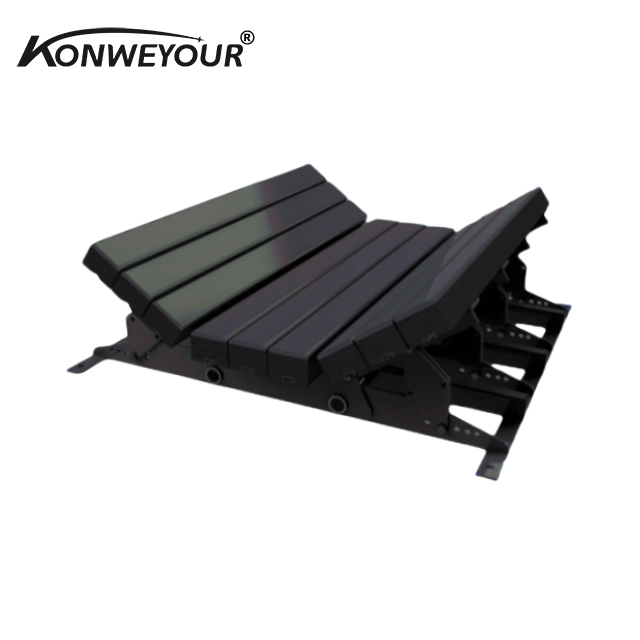
We use precision-engineered skirting and impact beds that stabilize the material flow at transfer points, minimizing dust and waste.

What energy-saving options are available for large-scale conveyor systems?

We offer Variable Frequency Drives (VFDs) and low-rolling-resistance idlers that can reduce total electricity consumption by up to 25%.

Get a Custom Engineering Consultation

Our experts are ready to optimize your material handling efficiency in Japan. Contact us today for a technical audit.

Contact Us Now

If you are interested in our products, you can choose to leave your information here, and we will be in touch with you shortly.

  • captcha