Advanced conveyor transfer systems for Netherlands Industrial Hubs

Advanced conveyor transfer systems for Netherlands Industrial Hubs

Engineering high-efficiency material handling solutions tailored for the rigorous demands of Dutch mining and heavy manufacturing sectors.

Advanced conveyor transfer systems for Netherlands Industrial Hubs

Integrating precision engineering and durable design to optimize bulk material flow across the Netherlands' most challenging operational environments.

The State of Material Handling in the Netherlands

Analyzing the synergy between Dutch logistics excellence and heavy-duty transport needs.

The Netherlands serves as the gateway to Europe, where the integration of a robust conveyor system is critical for port logistics and inland industrial parks. The local market is characterized by a high demand for energy-efficient and low-emission equipment to align with strict EU environmental regulations.

In the specialized extraction sectors, the reliance on a high-performance mine conveyor is evolving. While traditional mining has shifted, the focus has moved toward sustainable quarrying and the handling of recycled aggregates, requiring equipment that can withstand corrosive coastal air and varied soil stability.

Current operations in the region are increasingly prioritizing modularity. The ability to quickly replace conveyor components without extensive downtime is a primary driver for industrial procurement in the Rotterdam and Antwerp-adjacent corridors.
Evolution and Trajectory of Conveying Technology

From mechanical simplicity to intelligent automation in bulk material transport.

Market Development History

During the late 20th century, the Dutch industrial landscape relied on basic belt-driven systems. The primary focus was on sheer volume and durability, with the coal mine conveyor serving as the backbone for energy production facilities and heavy industrial heating plants.

Between 2000 and 2015, the industry transitioned toward "Precision Handling." This era saw the introduction of variable frequency drives (VFDs) and specialized belt materials, reducing energy consumption and improving the longevity of critical mechanical parts.

From 2016 to the present, the trajectory has shifted toward Digital Twin integration and IoT monitoring. Systems are no longer just hardware; they are data-driven assets that predict failures before they occur, significantly lowering operational expenditure (OPEX) for Dutch firms.

Future Development Trends

Carbon-Neutral Propulsion

Shift toward permanent magnet motors and regenerative braking systems to meet the "Green Deal" goals of the Netherlands.

AI-Driven Predictive Maintenance

Utilization of acoustic sensors to detect bearing wear in real-time, optimizing the replacement cycle of wear-and-tear parts.

Autonomous Modular Scaling

Development of plug-and-play conveyor modules that can be reconfigured via software to handle different material densities.

Industry Trends and Future Outlook

Strategizing the next decade of automated material movement.

Smart Sensing Integration
Integrating LiDAR and ultrasonic sensors to optimize belt load and prevent spillage in real-time.
Sustainable Metallurgy
Using recycled high-tensile steel for frame construction to reduce the embodied carbon of the installation.
Low-Friction Polymers
Implementing advanced HDPE and UHMWPE liners to reduce drag and energy consumption.
Intermodal Sync
Seamless integration with automated guided vehicles (AGVs) and port crane systems.

Industry Outlook

Google search trends indicate a significant rise in queries regarding "automated bulk handling" and "energy-efficient conveyors" within the Benelux region. This reflects a broader shift toward the "Industry 4.0" paradigm where hardware is a secondary component to the controlling software logic.

Over the next 3-5 years, we expect the Netherlands to lead in the adoption of "Circular Conveying," where systems are designed for complete disassembly and material recovery at the end of their lifecycle, ensuring zero waste in industrial infrastructure.

Local Application Scenarios in the Netherlands

Tailored conveyor solutions for specific Dutch economic activities.

01. Rotterdam Port Bulk Terminal

Deployment of high-capacity transfer systems to move iron ore and grains from deep-sea vessels to inland barges, utilizing corrosion-resistant alloys for the salt-heavy environment.

02. Limburg Quarrying Operations

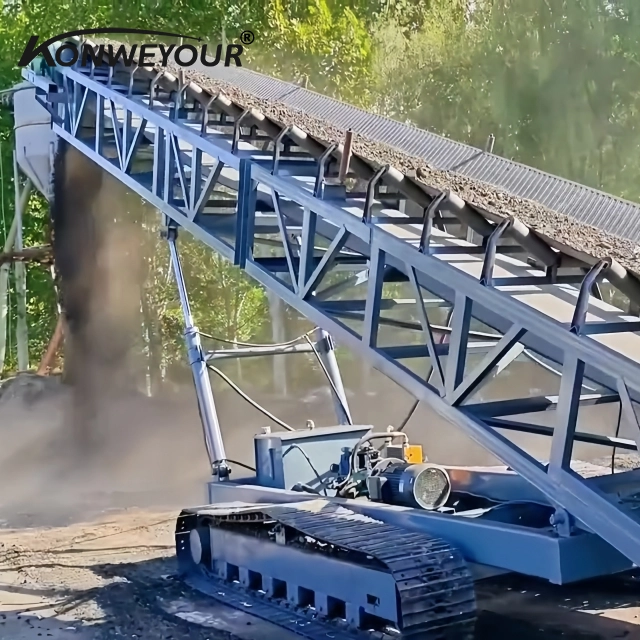
Implementation of a heavy-duty mine conveyor for the extraction of aggregates, featuring steep-angle belts to navigate the undulating terrain of the southern region.

03. Greenhouse Logistics Hubs

Customized light-load conveyor systems for the automated transport of horticultural products in the Westland region, focusing on hygiene and moisture resistance.

04. Industrial Waste Recovery Centers

Specialized sorting conveyors equipped with magnetic separators to recover ferrous metals from municipal waste streams, supporting the Dutch circular economy.

05. Coal-to-Biomass Transition Plants

Retrofitting an existing coal mine conveyor infrastructure to handle wood pellets and bio-fuel, requiring modifications to the belt friction and fire suppression systems.

Brand Story

Global Development Journey of Hebei Juntong Machinery Manufacturing Co., Ltd.

Foundation of Excellence

Established with a vision to solve the most grueling material transport challenges, focusing on structural integrity and mechanical precision.

Technological Pivot

Transitioned from standard manufacturing to R&D-led engineering, introducing patented belt-tracking technologies for extreme environments.

Global Market Expansion

Entering the European market by aligning production standards with ISO and CE certifications, specifically targeting the Benelux industrial sector.

Sustainability Integration

Launching the "Green-Move" initiative to reduce the energy footprint of heavy-duty conveyors through advanced material science.

Industry Leadership

Becoming a trusted partner for the world's most complex mining and logistics projects, delivering reliability where it matters most.

Complete Conveying Portfolio for the Netherlands

From individual components to turnkey transfer systems, engineered for European standards.

Frequently Asked Questions - Netherlands Market

Technical insights and procurement guidance for regional engineers.

How do I choose the right conveyor components for coastal humidity in Rotterdam?

We recommend using stainless steel 316 or galvanized coatings for all structural conveyor components to prevent oxidation and ensure longevity in high-salinity environments.

Can a mine conveyor be repurposed for aggregate handling in Dutch quarries?

Yes, a heavy-duty mine conveyor is ideally suited for aggregates. However, we suggest updating the belt grade to an abrasion-resistant compound to handle the sharper edges of crushed stone.

What are the energy-saving benefits of a modern conveyor system?

A modern conveyor system utilizing IE4 motors and optimized tensioning can reduce electricity consumption by up to 25% compared to legacy systems.

How do conveyor transfer systems minimize material dust in urban areas?

Our conveyor transfer systems incorporate enclosed chutes and dust suppression sprays, ensuring compliance with Dutch air quality standards.

Is a coal mine conveyor suitable for biomass pellets?

While the structure of a coal mine conveyor works, biomass requires specific fire-resistant belting and anti-static properties to prevent combustible dust explosions.

What is the typical lead time for custom conveyor components in Europe?

Depending on the complexity, standard conveyor components are shipped within 2-4 weeks, while custom-engineered transfer systems require 8-12 weeks for fabrication and testing.

Ready to Optimize Your Material Flow?

Contact our engineering team today for a technical consultation tailored to your operations in Netherlands.

Contact Us Now

If you are interested in our products, you can choose to leave your information here, and we will be in touch with you shortly.

  • captcha